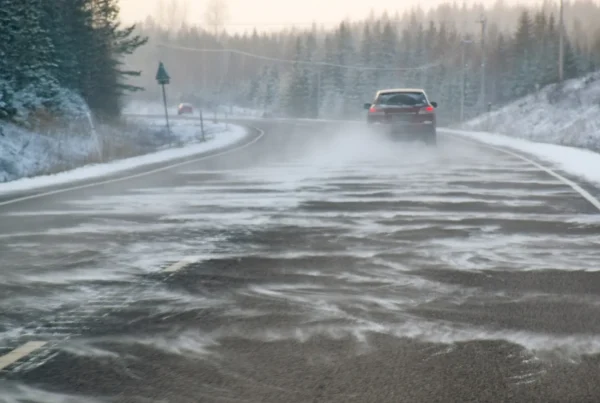
Winter around here doesn’t ease in politely. One week you’re raking leaves in Bloomsburg, and the next there’s a slush line on Route 15 through Shamokin Dam, and enough salt on I-80 to season a Thanksgiving turkey.
If your car isn’t ready for that, you find out at the worst possible moment: a dark parking lot in Williamsport, a hill you can’t climb in State College, or a windshield you can’t see through on the way to work.
The good news is that winter car maintenance in Pennsylvania isn’t complicated. It’s a handful of checks, most of which take minutes. We put together a summer road trip checklist a while back, and this is its cold-weather counterpart: the 7-point walkthrough we run for our neighbors across Columbia, Snyder, Centre, and Lycoming counties every fall.
1. Check Your Tire Tread First
Tires are the only part of your car that actually touches the road, so this is where winter prep starts and where it matters most.
Grab a quarter and stick it into a tread groove with Washington’s head pointing down. If you can see the top of his head, you’re at about 4/32″ or less. Snow traction drops noticeably right about there, even though the tire is still legal.
Things to look for while you’re down there:
- Uneven wear across the tread, which often points to alignment or inflation problems
- Wear on one shoulder only, another alignment clue
- Cracks or dry rot in the sidewall on an older set
- Cupping or scalloping, which can mean worn suspension parts
- Cuts, gouges, or embedded debris from the road hazards and everyday debris that pile up along shoulders this time of year
Deep tread is what channels slush and packed snow out from under the tire. A shallow tire hydroplanes on slush and glazes over on packed snow, and no amount of careful driving fully makes up for it. If your set is marginal now, it will not be better in January.
Don’t skip tire pressure
Air contracts when it gets cold. As a rough rule, a tire loses about a pound of pressure for every 10 degrees the temperature drops, so the set you filled on a mild October afternoon can be several pounds low by the first hard freeze. That is usually why the light on your dash comes on during the first cold snap of the year.
Underinflated tires wear their shoulders off, steer vaguely, and give up grip exactly when you want it. Check pressure with a gauge when the car has been sitting, not after a drive, and set it to the number on the sticker in your driver’s door jamb rather than the number molded into the sidewall.
Uneven wear showing up in the fall usually has a cause worth fixing, not just a tire worth replacing. Our post on how to tell if you need a wheel alignment covers the signs.
2. Winter Tires or All-Seasons? What Actually Works Here
This is the question we get most often, and the honest answer is that it depends on where you drive and how steep your driveway is.
All-season tires
They’re a compromise by design. Fine for cleared roads and light snow, and for plenty of in-town drivers they’re genuinely enough.
Winter tires
A different product entirely. The rubber compound stays soft below about 45°F instead of turning hard and glassy, and the tread is cut with far more biting edges. The difference isn’t subtle. On packed snow and cold pavement, a winter tire stops meaningfully shorter than an all-season, and it grips going uphill where an all-season just spins.
The drivers who get the most out of a set of winter tires in State College, PA and on the ridge-and-valley roads around it:
- Anyone with a steep or unplowed driveway
- Commuters who are on the road before the plows go out
- Rural drivers on township roads that get salted late, if at all
- Anyone driving a rear-wheel-drive vehicle
- Drivers who simply want the shortest stopping distance they can buy
A couple of things people get wrong. All-wheel drive helps you go, but it does nothing to help you stop or turn. Plenty of AWD crossovers slide through Centre County intersections every winter on hard all-season rubber. Winter tires also belong on all four corners, never just the front two, because mismatched grip can make the rear end slide in a corner.
Modern studless winter tires cover almost every driver in this part of the state, and they stay quiet and civil on dry pavement between storms. Studs are a niche choice for steady ice and hard-packed snow, and Pennsylvania only permits them during a set window in the colder months, so ask before you commit to a set. If you do run a dedicated winter set, plan on swapping back in the spring and storing the off-season tires somewhere dry and out of the sun, which is a service we handle for a lot of customers.
One timing note: if you’re pricing out snow tires in Bloomsburg, State College, Williamsport, or Shamokin Dam, buy them in October or early November. Once the first real storm hits, popular sizes disappear across the whole region and everybody wants the same appointment slot on the same morning.
3. Load Test the Battery Before the First Cold Snap
Cold weather doesn’t create battery problems. It exposes them.
A battery loses a big chunk of its cranking power as the temperature drops, and thick cold oil makes the engine harder to turn over at the same time. So a battery that has been quietly weakening all summer finally gives up on the first genuinely cold morning.
A load test is the check that matters. Anyone can read voltage, but voltage alone will happily tell you a dying battery looks fine. A load test measures whether it can still deliver current under real demand, which is exactly what starting your car asks of it.
Warning signs worth acting on:
- Slow, labored cranking, especially on cold mornings
- Headlights that dim noticeably at idle
- A battery more than three or four years old
- Corrosion crusted around the terminals
Short winter trips make all of this worse. A five-minute run to the store barely replaces the charge that starting the car used, and with the defroster, heated seats, wipers, and headlights all pulling at once, a marginal battery never really catches up. Cleaning corroded terminals and checking that the charging system is keeping up costs very little.
Battery testing is quick, and it’s the cheapest insurance on this whole list. Waiting is how you end up needing a jump start in a grocery store lot at 6 p.m. in the dark.
4. Replace Wipers and Switch to Winter Washer Fluid
Visibility is a safety system, and it’s the one drivers ignore the longest.
Summer sun bakes wiper rubber until it hardens and streaks. Then you hit the first snowy day, the blade skips across a film of road salt, and you’re steering by memory.
Replace blades that streak, chatter, or leave a haze. It’s inexpensive and takes minutes.
The bigger deal, honestly, is washer fluid. Summer-blend fluid freezes. If it freezes in the reservoir or the lines, you have no way to clear the salt spray a passing truck throws onto your windshield on I-80, and that spray dries to an opaque gray film in seconds. Switch to a winter-rated fluid, keep the reservoir full, and toss a spare jug in the trunk.
While you’re at it, check that your rear defroster works and that the heater actually blows warm. December is a bad time to find out it doesn’t. Give your headlights and taillights a look too. Days are short, storms make them shorter, and a burned-out bulb or a lens caked in road grime cuts how far ahead you can see and how early the driver behind you notices your brake lights.
5. Check the Coolant and Its Freeze Point
Coolant does two jobs, and in winter the second one becomes the important one: it keeps the engine from freezing.
The mix ratio is what sets the freeze point. Coolant that has been topped off with plain water over the years, or that’s simply old and worn out, can freeze in a cold snap. Frozen coolant can crack a radiator or a heater core, and in a bad case the engine block itself. That’s a repair bill in a completely different category from everything else on this list.
Old coolant also loses its corrosion inhibitors, which is how water pumps and radiators quietly die from the inside.
Getting the freeze point tested takes a minute during a routine auto repair and maintenance visit, and it’s the kind of check that costs almost nothing and prevents almost everything.
While the hood is up, look at your oil too. Cold oil is thick oil, and old, dirty oil is thicker still, which makes for harder starts and slower protection in the seconds right after a cold start. If you are near the end of an interval heading into winter, get it done before the temperature drops rather than after. Our guide on when to get an oil change walks through the signs your car is asking for one.
6. Have the Brakes Inspected
You need shorter stopping distances in winter, right when the road is doing everything it can to give you longer ones.
Central PA brakes also have a specific enemy: road salt. Salt spray speeds up corrosion on rotors, caliper hardware, and brake lines, and the stretch of I-80 or Route 15 you commute on gets plenty of it. Cars that sit for a few days between drives are the worst off, because the salt sits there working the whole time.
Signs it’s time to have brakes looked at:
- Squealing or grinding when you stop
- A pedal that feels soft, low, or spongy
- Pulsing or shuddering under braking
- The car pulling to one side as you slow
- Longer stopping distances than you remember
Salt and slush also seize up parking brake cables and caliper slide pins, which is how one wheel ends up dragging while another does nothing. That imbalance is easy to miss on dry pavement and very easy to feel on a slick one.
Have your brakes inspected before winter, not during it. Balanced, healthy brakes are what let ABS do its job on a slick surface, and worn pads on one corner turn a snowy stop into a slide.
7. Build a Real Winter Emergency Kit
Some winter prep is about the car. This part is about you, for the day something goes wrong anyway.
Keep in the trunk:
- A sturdy ice scraper and snow brush, plus a small folding shovel
- Jumper cables or a charged jump pack
- A blanket, hat, and gloves
- A flashlight with fresh batteries
- Sand or cat litter for traction, which doubles as useful weight over the rear axle
- Water and a few snacks that won’t spoil
- A phone charger you don’t unplug from the car
- Basic flares or reflective triangles
Fill the gas tank when a storm is coming, too. A fuller tank means less condensation in the fuel system and a lot more idling time if you end up parked on I-80 waiting for a crash to clear. Before you pull out, clear the snow off the whole car and not just a porthole on the windshield, and knock the pack out of your wheel wells. A slab of snow sliding off your roof at highway speed is somebody else’s emergency.
Get Winter-Ready at Bastian Tire & Auto Centers
We’ve been keeping Central Pennsylvania drivers moving since 1958, and we’ve seen exactly what this region’s winters do to tires, batteries, and brakes. One pre-winter visit covers most of this list, and it’s a lot cheaper than a tow.
Looking for a tire shop near you? Stop in at our Bloomsburg, Shamokin Dam, State College, or Williamsport store and we’ll walk through your tires, battery, brakes, and fluids with you, then tell you straight what needs attention now and what can wait.
Don’t wait for the first storm.