Your brakes almost always tell you they’re wearing out before they actually fail. The trouble is that the warning usually shows up as a small noise or an odd feeling in the pedal, and it’s easy to turn up the radio and promise yourself you’ll deal with it next month.
Here in Central Pennsylvania, next month is a long time. Between the hills, the winter salt, and the stop-and-go crawl around State College and Williamsport, brake parts here work harder than they do in flatter, milder parts of the country.
The good news is that brake problems are among the most predictable things on a vehicle. Pads wear at a fairly steady rate, rotors give you warning before they fail, and hydraulic trouble almost always announces itself in the pedal first. You just have to know what you’re listening and feeling for.
So let’s walk through the brake warning signs one at a time: what each one actually means, how urgent it is, and when you should stop driving the vehicle altogether.
Why Central PA Roads Are Rough on Brakes
Brake pads wear by turning motion into heat. The more often you slow down, and the longer you hold the pedal, the faster the friction material disappears.
That’s the whole story behind why drivers in Centre, Lycoming, Columbia, and Snyder counties often need brake service sooner than the mileage in the owner’s manual suggests:
- Hills and grades. Riding the brakes down a long grade instead of downshifting bakes a lot of heat into the pads and rotors. Heat is what glazes pads and warps rotors.
- Stop-and-go traffic. A commute through downtown State College during the Penn State school year, or the Fourth Street corridor in Williamsport, can mean hundreds of stops in just a few miles.
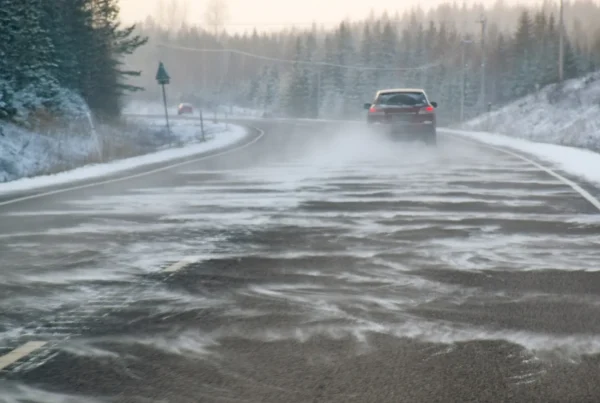
- Road salt and winter slush. Salt speeds up rust on rotors, brake lines, and caliper hardware. A caliper that seizes from corrosion drags the pad against the rotor all the time, not just when you brake.
- Short trips. Quick runs around Bloomsburg or Shamokin Dam never let the brakes fully dry out, which gives surface rust a head start.
- Towing and hauling. Trailers, work trucks, and loaded farm vehicles put far more weight behind the same set of brakes.
None of that means your brakes are fragile. It just means that around here, the calendar matters as much as the odometer. Two identical vehicles with identical mileage can be in completely different shape if one of them spends its life on flat highway miles and the other climbs hills in traffic every day.
The Five Brake Warning Signs That Matter Most
1. Squealing or Squeaking When You Brake
A high-pitched squeal when you press the pedal is usually the sound of a wear indicator, a small metal tab built into the pad that touches the rotor once the friction material gets thin. It’s designed to be annoying. That’s the point.
What it means: your pads are near the end of their life, but you likely still have some margin.
How urgent: get it inspected in the next week or two. Pads are the least expensive brake repair there is, and replacing them on time protects the rotors underneath.
One exception worth knowing: a light squeak on the first stop of a damp morning is often just surface rust wiping off the rotors. If it disappears after a stop or two and doesn’t come back, it’s usually nothing. A squeal that shows up on every stop, or gets louder as the brakes warm up, is the one to act on.
2. Grinding or a Deep Metallic Scraping
Grinding is a different sound and a different problem. It’s lower, harsher, and you can often feel it through the pedal.
What it means: the friction material is gone and metal is riding on metal. The pad’s backing plate is cutting into the rotor with every stop.
How urgent: this is the sign to stop putting it off. Grinding usually turns a simple pad job into pads plus rotors, and sometimes a caliper too. Your stopping distance is already longer than it should be.
If the grinding is loud, constant, or paired with a pedal that feels wrong, don’t keep driving on it. Get the vehicle to a shop, or have it towed.
There’s also a milder version worth mentioning. A faint scraping that comes and goes, especially at low speed, can be a loose dust shield or a small stone caught between the shield and the rotor. That one is cheap to fix, but only an inspection tells you which of the two you have.
3. A Soft, Spongy, or Sinking Pedal
A healthy brake pedal feels firm and stops in roughly the same place every time. When it feels soft, mushy, or slowly sinks toward the floor while you’re sitting at a light on North Atherton Street, something is wrong in the hydraulic system.
What it means: usually air in the brake lines, a fluid leak, moisture-contaminated fluid, or a failing master cylinder. Older vehicles are more likely to have rust-pitted brake lines that seep, and Pennsylvania winters are hard on brake lines.
How urgent: this is the most serious symptom on the list. Worn pads fade gradually. A hydraulic problem can go from “feels a little off” to “no brakes” without much warning.
Stop driving. Check your fluid level if you can, and have the vehicle brought in rather than driven in.
The opposite problem counts too. A pedal that suddenly feels rock-hard and takes real force to push is often a failed brake booster, and it also needs immediate attention.
4. The Car Pulls to One Side When You Brake
If the steering wheel tugs left or right when you press the pedal, the two sides of the vehicle aren’t braking with equal force.
What it means: commonly a sticking caliper, a collapsed brake hose, uneven pad wear, or contamination on one side. It can also be a tire or suspension issue rather than a brake issue, which is why a real diagnosis matters.
How urgent: soon. Pulling under braking is unpredictable on wet or icy pavement, and a dragging caliper cooks that corner’s pad and rotor while you drive.
If the pulling happens all the time and not just when braking, you may be looking at an alignment problem instead. Our post on how to tell if you need a wheel alignment walks through the difference.
5. A Brake Warning Light on the Dashboard
Two different lights matter here, and they don’t mean the same thing.
- BRAKE (usually red, sometimes the word “BRAKE” or an exclamation point in a circle). This can mean the parking brake is engaged, the fluid is low, or there’s a pressure problem in the system. Once you’ve confirmed the parking brake is off, treat a red brake light as a stop-driving situation.
- ABS (amber). Your anti-lock system has faulted, often a wheel speed sensor. Normal braking still works, but you lose anti-lock help in a panic stop or on ice, which is a real concern on a Central PA hill in February. Get it scanned promptly.
Some vehicles also use a separate pad-wear sensor light. Whichever light you’re seeing, the fix starts with reading the codes rather than guessing.
Brake Symptoms That Are Easy to Misread
A few brake complaints get blamed on the wrong part:
- Shuddering or pulsing through the pedal at highway speeds usually points to uneven rotor thickness from heat, not to worn pads.
- A clunk when you first brake can be loose caliper hardware or worn suspension components.
- A burning smell after a long downhill means overheated brakes. Pull over safely and let them cool. Don’t ride the pedal down the next grade.
- Vibration only in the steering wheel may be a tire balance issue rather than a brake problem at all. Low or uneven tire pressure and damage from road debris can both feel like a brake complaint from the driver’s seat.
That’s why good brake service in Central PA starts with measuring pad thickness, rotor condition, fluid, hoses, and hardware instead of simply replacing the part that made the noise.
What a Real Brake Inspection Actually Covers
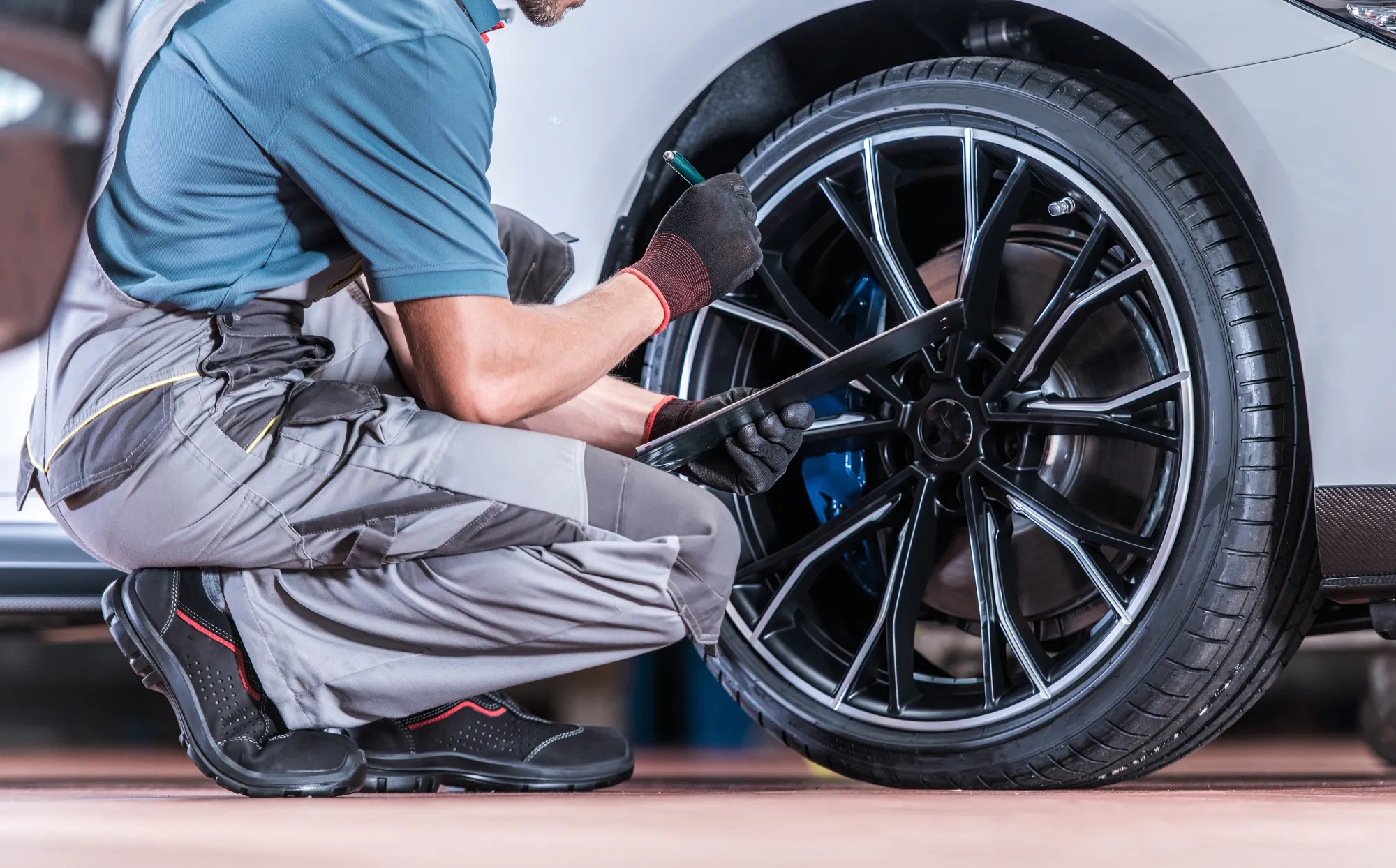
If you’ve never watched one done, a brake inspection is more than a quick look through the wheel spokes. The wheels come off, and a technician measures and checks:
- Pad thickness on all four corners, compared against the minimum spec for your vehicle
- Rotor thickness and surface condition, including whether there’s enough material left to resurface or whether replacement is the honest answer
- Caliper movement, since a caliper that doesn’t slide freely wears pads unevenly no matter how new they are
- Brake fluid level and condition, because fluid absorbs moisture over time and old fluid boils at a lower temperature
- Hoses and hard lines for cracking, swelling, seepage, and rust damage
- Parking brake function, which often gets ignored until inspection day
That whole picture is what tells you whether you need work now, whether you can safely wait a few months, or whether the noise you heard was nothing at all. It also matters for Pennsylvania’s annual safety inspection, where worn pads, scored rotors, and leaking lines are all things that can keep a vehicle from passing.
Habits That Stretch Brake Life on Central PA Roads
You can’t change the terrain, but you can change how much work your brakes do on it:
- Use engine braking on long descents. Shifting down and letting the engine hold the vehicle back keeps heat out of the pads. Save the pedal for controlling speed, not carrying the whole load.
- Leave more following distance. Coasting toward a red light instead of racing to it and stopping hard is the single cheapest brake upgrade there is.
- Rinse the underside in winter. Washing off road salt, especially after a slushy stretch, slows corrosion on lines and caliper hardware.
- Don’t ignore the parking brake. Using it regularly keeps the cables and mechanism from seizing up.
- Get pads replaced before they’re gone. Replacing pads at the wear indicator instead of after the grinding starts often saves the rotors entirely.
Fixing brakes early is almost always the cheaper path. Waiting turns a pad replacement into pads, rotors, and sometimes a caliper.
When to Schedule an Inspection vs. When to Stop Driving
Here’s the short version.
Schedule a brake inspection soon if you notice:
- Squealing that comes back on every stop
- Braking that feels a little less confident than it used to
- Pedal pulsing or vibration when slowing from highway speed
- An amber ABS light
- More than a year since anyone last looked at your brakes, especially with heavy hill or city driving
Stop driving and have the vehicle towed if you notice:
- A pedal that sinks toward the floor or feels spongy
- A pedal that goes almost to the floor before anything happens
- A red brake warning light with the parking brake released
- Visible fluid pooling near a wheel or under the master cylinder
- Loud grinding, or a pull under braking you can’t control
- Any real doubt that the vehicle will stop when you need it to
Being cautious costs you a tow. Waiting can turn a small repair into a larger one.
Heading out on a longer drive? Brakes belong on the same list as tires, fluids, and belts. Our summer road trip checklist covers the rest of that pre-trip walkthrough.
Need Brake Repair in State College, PA or Nearby? We’re Close By
Bastian Tire & Auto Centers has been taking care of Central Pennsylvania drivers since 1958, with locations in Bloomsburg, Shamokin Dam, State College, and Williamsport. Looking for brake repair in State College, PA, or a brake shop closer to Bloomsburg? Our technicians will tell you what your brakes actually need, what can wait, and what it will cost before any work starts.
If something doesn’t sound or feel right when you stop, don’t wait for it to get louder.