There is a difference between a car that feels fine and a car that passes. Once a year a state-certified inspector measures your vehicle against a written list of criteria and hands down a verdict, and that verdict does not care how the car feels from the driver’s seat. Tread that still grips in the rain can sit under the legal minimum. A truck that runs strong can be held for a hole in the exhaust you never hear over the radio.
The good news is that a Pennsylvania state inspection is not a mystery. The items an inspector must check are published, and several have exact numbers attached. So you can check a real part of the list yourself, in your own driveway, the week before your appointment. Nothing you find gets you out of the inspection, but it turns inspection day from a surprise into a confirmation.
Here is how the annual inspection works for drivers around Bloomsburg, Shamokin Dam, State College and Williamsport: what you can sanity-check yourself, and what is better left to a lift. The safety criteria are the same statewide, so a state inspection in State College, PA, is measured exactly the way one is in Bloomsburg, Shamokin Dam or Williamsport. What changes from county to county is the emissions side, and we will sort that out below.
What a Pennsylvania State Inspection Actually Is
Pennsylvania requires a periodic safety inspection at an official inspection station, which in practice means a repair garage or a service station with a repair shop. It is not an opinion about how your car is holding up. It is a pass or fail against state criteria, from someone certified to make the call.
Most passenger cars and light trucks that pass get a sticker valid for one year. According to PennDOT, that year runs from the month of inspection or from the expiration of the current sticker, so going in a little early costs you nothing on the calendar. Motorcycles differ: their inspection expiration is tied to the vehicle’s registration.
Your deadline is not a season. It is the sticker in the corner of your windshield. Two drivers on the same street in Bloomsburg can have inspection months five months apart, which is why “everybody gets it done in the spring” is local folklore rather than a rule.
One more timing rule is worth knowing in a college town. A vehicle kept outside Pennsylvania continuously for 30 days or more is not required to be inspected until 10 days after it re-enters the Commonwealth. For a Penn State student who takes the car home for the summer and returns to State College in August, that is a real cushion.
The Systems an Inspector Puts Eyes On
For passenger cars and light-duty trucks, PennDOT publishes what has to be checked. The list is longer than most drivers expect:
- Suspension components and steering
- Braking systems
- Tires and wheels
- Lighting and electrical systems
- Glazing, which means the glass, plus mirrors
- Windshield washer, defroster and wipers
- Fuel system
- Speedometer and odometer
- Exhaust system
- Horns and warning devices
- Body and chassis
Notice something useful about that list: roughly half of it is visible from outside the car with the doors open and the engine off, and the other half needs the vehicle in the air. That split is the practical way to think about preparing, and it is how the rest of this PA safety inspection checklist is organized.
Your PA Safety Inspection Checklist: The Driveway Half
Give yourself twenty minutes about a week before your appointment, and bring a family member for the lights.
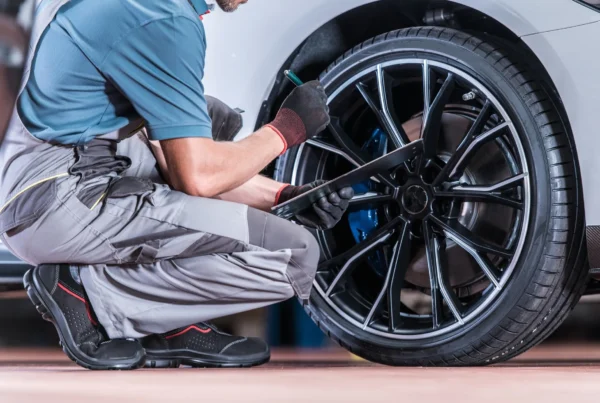
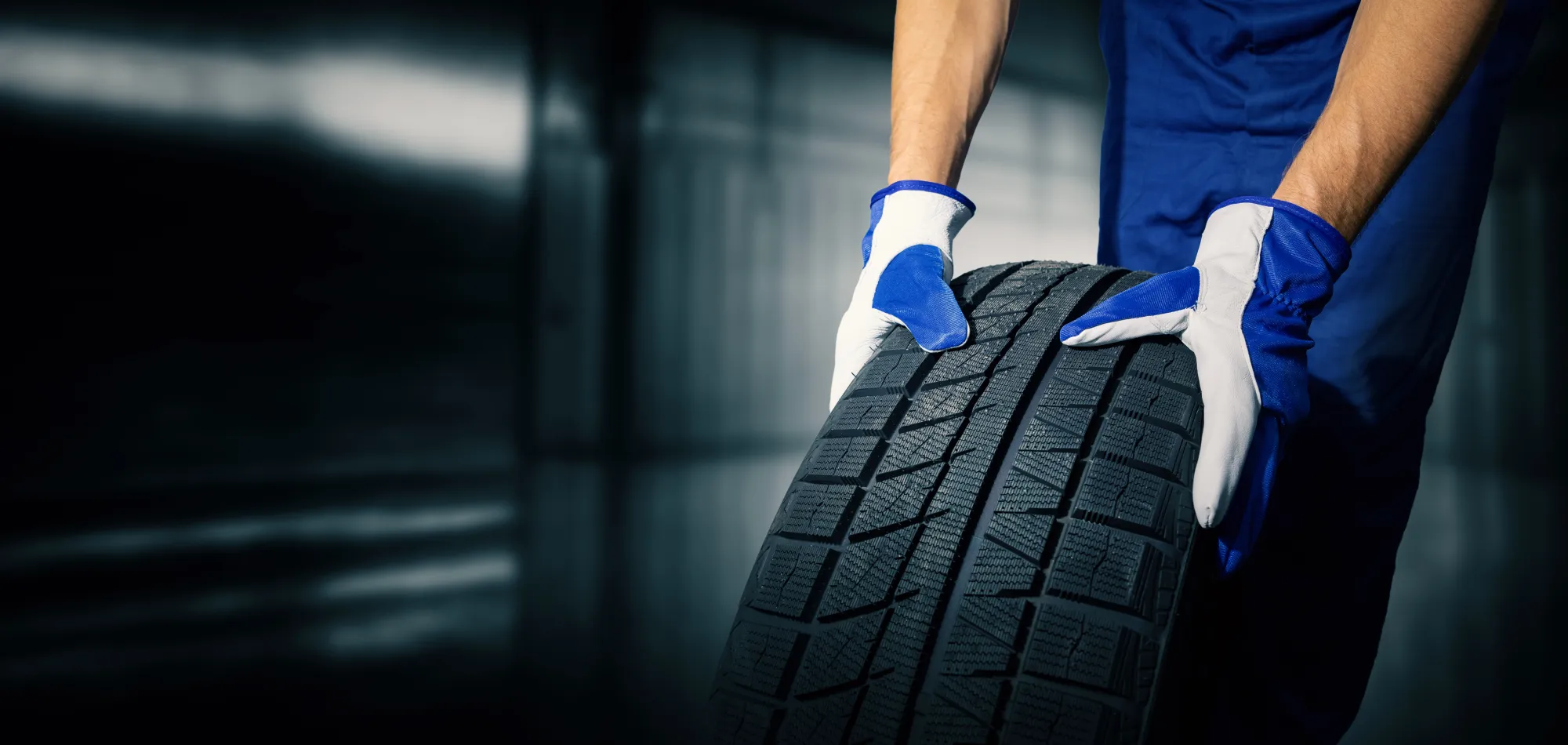
Tire tread. Under 67 Pa. Code, a tire is rejected when two adjacent tread grooves measure less than 2/32 of an inch at any point. Front tires on vehicles over 10,000 pounds gross weight have a higher bar, 4/32 of an inch. A tread depth gauge is worth owning, and the classic penny trick still tells you when you are close. Here is the part worth thinking about: tread at 3/32 of an inch passes the letter of the rule and leaves you nothing in reserve, with a Central PA winter still ahead. Knowing that in late summer means you plan tires on your schedule rather than on inspection day.
Every exterior bulb. The rule is blunt: if an exterior bulb or sealed beam that came on the vehicle or was installed on it fails to light properly, that is a rejection. Walk the car with the headlights on, then high beams, brake lights, reverse, each turn signal, and the license plate lamp. That last one is the item drivers forget most reliably, because you never see it while you are driving.
Turn signal flash rate. Signals must flash between 60 and 120 flashes per minute. If your dash indicator suddenly blinks faster than it used to, that is usually one burned-out bulb announcing itself. Five minutes in a driveway, or a held sticker at the shop.
Windshield damage, and where it sits. The state defines an acute area on the driver’s side of the windshield, 8 1/2 inches wide and 5 1/2 inches high, centered in the driver’s normal line of vision. Defects there are grounds for rejection, as are hazardous cracks or discolorations elsewhere that interfere with the driver’s vision. A stone chip picked up on Route 15 or I-80 can be a rejection item or a non-issue depending on where it landed, so look for it from your normal driving position, not from outside the car.
Wipers, washer, defroster, horn and mirrors. All of these are on the list. Run the washer and confirm fluid reaches the glass. Run the wipers on a wet windshield and watch for streaking. Turn the defroster on and feel for airflow. Press the horn. Check that your mirrors are present, intact and adjustable.
Dash warning lights. Note anything illuminated, including a check engine light, and mention it when you book. That is information the shop wants before your car is on the lift, not after.
The Lift Half: Where Stickers Actually Get Held
Now the honest part. The findings that hold a sticker are usually the ones you cannot see from the driver’s seat, which is the real argument for having a shop near you look before your appointment rather than on the day of it.
Brake linings. Bonded linings under 2/32 of an inch at the thinnest point are cause for rejection, as are riveted linings less than 1/32 of an inch above the rivet head. Two thirty-seconds of an inch is thinner than most people picture, and brakes that stop confidently today can be sitting right at that line. For the symptoms that show up before that point, our post on brake warning signs Central PA drivers shouldn’t ignore covers what to listen and feel for.
Steering freeplay. The allowance is keyed to the diameter of the steering wheel, not your rims: 2 inches of freeplay on a steering wheel 16 inches or less, 2 1/4 inches at 18, 2 1/2 inches at 20, and 2 3/4 inches at 22. The inspector measures it as part of the steering column check, along with a look at the gear box, the coupler and the turns from lock to lock.
Shocks and suspension. Missing shock absorbers are an automatic problem, and so is severe leakage, which the state distinguishes from slight dampness. That call gets made at the shock body itself.
Exhaust. No muffler, a muffler with an external repair, or holes, cracks and leaking seams anywhere in the system will hold a vehicle. This is the quiet one for older vehicles and work trucks here, because seams that spent several winters over salted roads between Williamsport and Shamokin Dam rust from the outside in. A local fleet pickup is likelier to be held for exhaust than for anything its driver could have spotted.
If you would rather know about all of that in advance, that is what a pre-inspection look-over is for. We put the vehicle on a lift, tell you what would be flagged, and let you decide before the clock on your sticker runs out. Our auto repair and maintenance services page covers that work.
Emissions Depends on Your County, Not Your Car
This is the piece that confuses people most, and it trips up drivers here more than most, because the county line matters and our four stores sit on different sides of it.
Emissions inspection in Pennsylvania is a regional program, not a statewide one. Centre and Lycoming counties are part of the Northern Region program, along with Blair, Cambria, Erie, Lackawanna, Luzerne and Mercer. If your vehicle is registered in one of those counties and it is a subject vehicle, the emissions inspection is done annually, at the same visit as the safety inspection or before it.
Columbia, Northumberland, Snyder and Union counties are different. They are among the 42 Pennsylvania counties where registered vehicles need no emissions inspection at all. Most passenger vehicles and light trucks at 11,000 pounds and less in those counties still get a visual anti-tampering check with the safety inspection, confirming the emissions control components the manufacturer installed are still there. Vehicles registered as classic or collectible are exempt from that portion.
So a commuter registered in Centre County who gets inspected in State College faces a different requirement than a neighbor registered in Snyder County who stops at our Shamokin Dam store, even in identical vehicles.
A few more rules narrow it further. The emissions program covers gasoline-powered vehicles model year 1975 and newer with a gross vehicle weight rating of 9,000 pounds or less. Current model year vehicles are exempt, and so are vehicles driven less than 5,000 miles per year. In the Northern Region, subject vehicles from 1975 and newer get a gas cap test plus a visual inspection of the emissions equipment.
That is a lot of conditions stacked together, and the answer depends on your registration address, model year, weight rating and mileage. Do not assume, and do not take a neighbor’s word for it. Call the store nearest you or check our locations page, and let us confirm what applies to your vehicle and your county before you show up.
What Drives the Cost of Inspection Day
The inspection itself is the predictable part. Fees are posted at official inspection stations, and in the Northern Region the safety and emissions tests happen at the same visit. What posted fees never include is repairs to correct defects, and that is the part that varies from car to car.
So think about scope rather than a number. A vehicle needing one wiper blade and one bulb is a different day than one needing tires, brakes and exhaust work at once. A part sitting on our shelf also means a shorter visit than one we have to order in. And if the vehicle has to come back so a new certificate can be affixed, state rules cap that fee at no more than the station’s posted fee for a certificate of inspection.
Because it all depends on the specific vehicle in front of us, we are not going to guess at a figure here. Tell us your year, make and model along with anything you already suspect, and we will quote your own vehicle at the store nearest you. Ask us for a current quote first, and you will know the number before you commit to anything.
A Sensible Timeline for Annual Vehicle Inspection in Central PA
The whole approach, in four steps:
- A week out: walk the driveway half of the list. Tread, every bulb, signal flash rate, wipers and washer, defroster, horn, mirrors, glass in the acute area, dash lights.
- Same day: fix the easy items or book them, and note anything you are unsure about.
- Before your sticker month runs out: book it, leaving room for a part to be ordered.
- At the appointment: tell us what you found. A driver who arrives with notes gets a faster, clearer visit.
Tires are the item most likely to come up, and the one most worth handling on your own timeline. If your tread measured close, our tires and wheels service is the place to start, and handling it before inspection month means you are choosing tires rather than reacting to a failed line item.
Get Your Vehicle Ready Before Inspection Month
You cannot talk an inspector out of a measurement. What you can do is walk in already knowing what the measurement will say, which is how we would want our own families to handle a Pennsylvania state inspection. Check what you can see, let us check what needs a lift, and confirm what your county requires instead of assuming.
Ready to get ahead of it? Request a quote and tell us about your vehicle. Our team in Bloomsburg, Shamokin Dam, State College and Williamsport will give you a current figure and a clear plan for your inspection.