A punctured tire may be repairable if the damage is in the main tread area, the hole is no larger than 1/4 inch (6 mm), and the tire has no internal damage. Punctures in the sidewall, shoulder, or belt-edge area require tire replacement.
You cannot make the final call by looking at the nail from the outside. A technician must remove the tire from the wheel and inspect the inner liner, sidewalls, and internal structure. Remaining tread, previous repairs, nearby punctures, and damage from driving on a flat tire can also determine whether a repair is safe.
The Short Answer: Location, Size, and Hidden Damage Decide
A technician will consider three main questions:
-
Where is the puncture?
Repairs are generally limited to the central tread area. Damage that reaches the shoulder, belt edge, or sidewall should not be repaired. -
How large is the injury?
The U.S. Tire Manufacturers Association recommends considering repair only when a puncture is no larger than 1/4 inch in diameter. -
What does the tire look like inside?
Even a small hole in the tread may be unsafe to repair if the tire has inner-liner damage, weakened sidewalls, overlapping repairs, or damage caused by driving while underinflated or flat.
A tire must meet all three requirements before it can receive a proper repair.
Punctures That May Qualify for Tire Puncture Repair
A small, straight nail hole near the center of the tread is the kind of damage most likely to be repairable. It still must meet these conditions:
- The entire injury is within the repairable tread area.
- The hole is no larger than 1/4 inch.
- The tire has enough tread remaining.
- A new repair will not overlap an earlier one.
- The tire does not have an improper existing repair.
- It was not damaged by being driven flat.
- An off-wheel inspection finds no internal structural damage.
For example, suppose you find a small nail in the center of the tread and the tire is still holding air. The tire may be repairable if the hole is within the size limit and an internal inspection finds no additional damage.
Tread depth matters as well. Michelin says a tire worn below 2/32 inch should not be repaired. Even if the puncture is small and properly located, a tire at or below that point needs to be replaced.
Earlier repairs can change the answer. Repair units cannot overlap, and the U.S. Tire Manufacturers Association advises against repairing a tire that already has an improper repair. As a result, two small punctures close together may make the tire unrepairable.
Damage That Means You Need a New Tire
Some tire injuries cannot be repaired safely, even when the visible hole looks small.
Sidewall punctures
The sidewall flexes as the tire rolls and supports the vehicle’s load. It cannot accept the same reliable repair used in the tread area. A punctured sidewall requires tire replacement.
Shoulder and belt-edge damage
The shoulder is the rounded section where the tread meets the sidewall. The U.S. Tire Manufacturers Association says an injury that extends into the shoulder or belt-edge area should not be repaired.
This also applies to angled punctures. A nail may appear to enter through the tread while the puncture channel travels toward the shoulder inside the tire.
That is why two similar-looking nails can lead to different recommendations. A small nail in the center tread may qualify for repair. The same nail near the outer edge may require replacement.
Punctures larger than 1/4 inch
Tread punctures larger than 1/4 inch are outside the accepted repair limit. With irregular damage, the injury inside the tire may also be larger than the opening suggests.
Worn or internally damaged tires
A tire should be replaced if it has insufficient tread, a damaged inner liner, weakened internal components, or signs that it was driven while flat. Cuts, bulges, and other visible damage also call for professional inspection because the puncture may not be the only issue.
Why the Tire Has to Come Off the Wheel
An outside inspection can show the puncture’s general location, but it cannot reveal the tire’s full condition. To inspect it properly, a technician must remove the tire from the wheel.
An off-wheel inspection allows the technician to check for:
- Damage around the puncture channel
- Cracking or abrasion inside the sidewall
- Damage to the inner liner
- Signs that the tire was driven with little or no air
- Improper previous repairs or repairs too close to the new injury
- An angled puncture that reaches the shoulder or belt edge
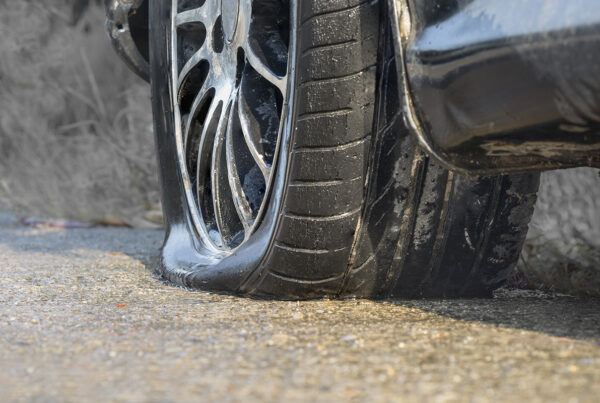
According to Michelin, driving on a completely flat tire can damage the internal sidewall and carcass, even over a short distance. The original nail hole may still look small, but damage caused after the tire lost air can make it unsafe to repair.
For that reason, a shop cannot give a final answer based on a photo or a quick look in the parking lot. The tire must come off the wheel before a technician can make a reliable repair-or-replace recommendation.
Why an Exterior Plug Is Not a Complete Repair
A complete puncture repair must address both the puncture channel and the tire’s inner liner.
A rubber stem fills the channel left by the nail or other object. An internal patch then seals the inner liner and prevents air from escaping. Many repairs use a combination unit commonly called a patch-plug.
An exterior rope plug addresses the hole only from the outside. It does not give the technician a chance to inspect the tire internally, nor does it provide the internal patch needed to seal the liner. The U.S. Tire Manufacturers Association does not consider a plug alone to be a complete repair.
An outside plug may slow the leak, but it cannot answer several key questions:
- Is the inner liner damaged?
- Does the puncture angle toward the shoulder?
- Was the tire damaged while underinflated?
- Is there another repair nearby?
- Is the rest of the tire in suitable condition?
A proper repair requires removing and inspecting the tire, preparing the damaged area, filling the puncture channel, and sealing the inner liner. The tire is then remounted and balanced.
What to Do When You Find a Nail
If you find a nail or screw in your tire, leave it in place until the tire can be inspected. Pulling it out may cause the air to escape faster. Nails, screws, and other everyday road hazards can create damage that looks minor from the outside but still requires a proper inspection.
Take these steps:
- Check the tire pressure if you can do so safely.
- Do not keep driving on a flat tire.
- Check for a bulge, sidewall damage, or a tire that is visibly losing its shape.
- Use a suitable spare or arrange assistance if the tire is flat or visibly damaged.
- Have the tire professionally inspected as soon as possible.
Do not assume the tire is safe simply because it still holds some air. A slow leak can get worse, and only an internal inspection can confirm that the puncture is repairable.
Common Repair-or-Replace Scenarios
These examples show what a technician will consider, but they cannot replace an off-wheel inspection.
- Small nail in the center tread: The tire may be repairable if the hole is no larger than 1/4 inch, the tread is adequate, and no internal damage is found.
- Small nail near the rounded shoulder: The tire needs to be replaced because the injury may extend into the shoulder or belt-edge area.
- Nail hole after driving on a flat tire: Replacement may be necessary even if the original puncture looks repairable from the outside.
- Exterior rope plug already installed: The tire still needs to come off the wheel. If it remains eligible for repair, it needs a complete repair that fills the channel and seals the inner liner.
- Two nearby punctures: One or both injuries may be unrepairable if the required repair units would overlap.
- Small puncture in severely worn tread: Replace the tire if its tread is below 2/32 inch.
- Sidewall puncture: Replace the tire rather than attempting a repair.