Every fall we get some version of the same question at the counter in Bloomsburg, Shamokin Dam, State College and Williamsport: do I really need snow tires, or are my all-seasons fine? The honest answer has less to do with what tire is popular this year than with the roads you actually drive between December and March. A flat five-minute run across Bloomsburg is a different problem than a daily climb over the Seven Mountains stretch of US 322, and the right tire follows the route.
So this is not a product roundup. It is a decision guide to winter tires in Central PA. We will go through what actually separates all-season, all-weather and dedicated winter rubber, what that mountain-and-snowflake symbol on the sidewall really certifies, and then a handful of honest driver profiles so you can find the one that sounds like your winter. By the end you should also know whether a second set on its own wheels is worth the seasonal swap. If you are working through the rest of your cold-weather prep, our winter car maintenance checklist for Central PA drivers covers the other items on the list.
The 45-Degree Rule Matters More Than the Snow Forecast
Most drivers have never been told the real dividing line between all-season and winter tires. It is temperature, not snow.
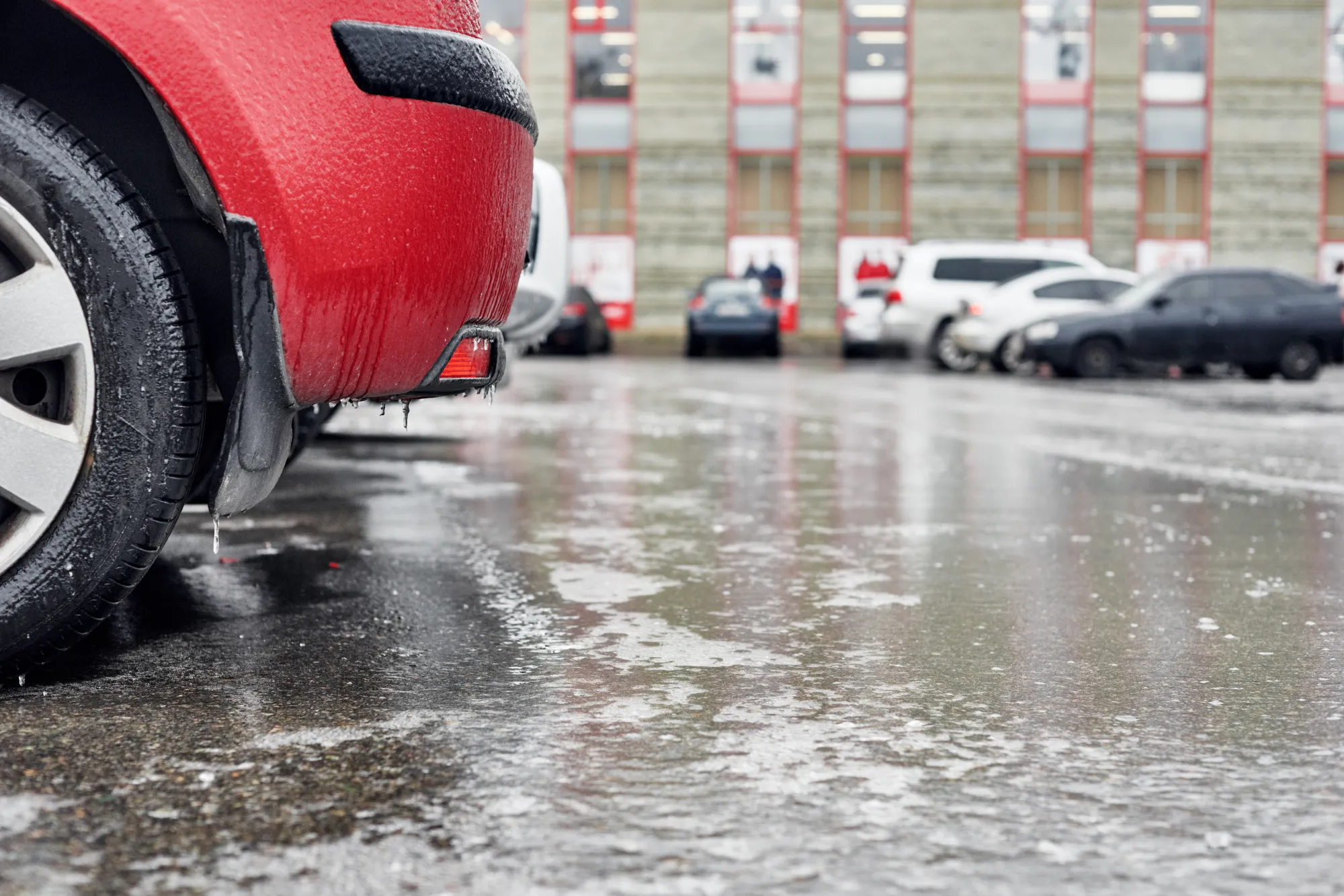
According to Michelin, all-season tire rubber begins stiffening below 45 degrees Fahrenheit, which costs you grip on cold, dry pavement before a single flake falls. Michelin’s own guidance is to switch to winter tires when average daily temperatures fall below 45 degrees. Around here, that means late fall, not the morning after the first storm.
Now look at what a Central PA winter does to the thermometer. State College averages roughly 45 inches of snow a year, with average lows near 25 degrees in December, 20 in January and 22 in February. Williamsport runs lighter on snow at about 32 inches, but its average lows are nearly identical: 24, 20 and 22. Both towns sit below that 45-degree threshold for months on end, every single year.
If you wait for snow in the forecast to think about tires, you have already spent most of a Pennsylvania winter on rubber that has gone stiff.
All Season vs Snow Tires in Pennsylvania: What Actually Separates Them
There are three real categories, not two, and the middle one is the one most drivers have never heard of.
All-season tires are the compromise that comes on most new vehicles. They handle rain and light snow perfectly well and they wear a long time, but as Michelin notes, they are not built for heavy snow or ice. Most carry only the old M+S (mud and snow) marking, which describes the shape of the tread pattern rather than any tested grip.
All-weather tires are a genuine third category. They are certified for severe snow service and built to run year-round with no seasonal changeover, which makes them the natural upgrade for a driver who wants better winter grip without owning two sets. The tradeoff is honest: they do not match a dedicated winter tire once conditions get bad.
Dedicated winter tires do two things at once. The compound is formulated to stay flexible and grippy through the whole cold season, which Michelin credits with shorter braking distances, better cornering and more stability on ice and slush. And the tread is cut differently, with far more open void and many more biting edges, so it can pack snow into its grooves, fling it out, and keep finding fresh road.
Consumer Reports’ testing lines up with that: winter tires give you better grip both to get moving in snow and to stop on ice. They also note some overlap, where the best all-seasons beat the weakest winter tires. That overlap is real, and it is why comparing all season vs snow tires in Pennsylvania deserves more thought than a flat yes or no.
What the 3PMSF Winter Tire Rating Does and Does Not Promise
That little symbol of three mountain peaks with a snowflake inside is the 3PMSF winter tire rating, and it is worth understanding precisely, because it promises less than most drivers assume.
To earn it, a tire has to score a snow traction index of at least 110 against a standard reference tire rated at 100, under the ASTM F1805 straight-line driving traction test. In plain terms: at least 10 percent more forward grip than the baseline tire on medium-packed snow.
The limits are the whole point:
- It measures forward acceleration on medium-packed snow. That is it.
- It does not test braking or cornering on ice. Les Schwab is direct about this.
- It says nothing about slush at highway speed, deep unplowed snow, or how the tire behaves once you turn the wheel.
Les Schwab also points out that 3PMSF tires use a compound that stays pliable at or below 40 degrees, and that dedicated winter tires are still better at clearing slush at speed and at cornering and braking on snow-covered and icy roads.
So the symbol is a real floor, and a 3PMSF all-weather tire is a legitimate step up from a plain all-season. It is simply not the same thing as a winter tire, and any shop that tells you otherwise is selling rather than advising.
Decide by the Roads You Actually Drive
Find the profile that sounds most like your winter.
Profile 1: The flat in-town commute. You live in Bloomsburg or Shamokin Dam, your drive is a few miles on borough streets and main roads, and those roads get plowed and salted early. You can wait out a bad morning if you have to. Here a strong 3PMSF all-weather tire is often the smartest buy, and a healthy set of all-seasons plus a little patience is defensible too. You get most of the safety benefit without owning a second set.
Profile 2: The mountain grade and the interstate. You run US 322 over the Seven Mountains between State College and Mifflin County, or you cover the Williamsport-to-Bloomsburg stretch of I-80 regularly. This profile pushes hard toward four dedicated winter tires. Sustained grades ask for traction going up and braking control coming down, at highway speed, which is also why it pays to know the brake warning signs Central PA drivers shouldn’t ignore before winter starts. The National Weather Service office in State College also warns that in a snow squall the sky goes from clear blue to heavy snow in minutes, with whiteout conditions, gusty winds and falling temperatures turning the road icy just as fast. There are variable speed limit signs on I-80 and I-81 for exactly this reason. When the road freezes quickly, tire compound matters a great deal.
Profile 3: The unplowed township road. You are up a hill somewhere in Centre, Columbia or Lycoming County on a road the township gets to when it gets to it, and some mornings you are the first vehicle out. This is the profile that has people looking for snow tires in State College, PA in the first place, because a climb out of Pine Grove Mills or Boalsburg at 6 a.m. does not care what the main roads look like. Getting up the hill and stopping at the bottom of it are both tread-and-compound problems, and careful driving works best with the right rubber on an unbroken surface.
Profile 4: The vehicle that sits. A student car parked near campus for three weeks, a second family vehicle, a weekend pickup. Every trip starts on fully cold-soaked rubber. If that vehicle only makes short in-town trips, all-weather tires are plenty. If it sits for weeks and then gets asked to make a highway run home in February, treat it like Profile 2.
Most drivers here land in Profile 1 or Profile 2, and those answers are genuinely different. Matching the tire to the route is the whole exercise.
Tread Depth Changes the Answer
Before you shop by category, measure what you already have. Tread depth can flip the answer.
Consumer Reports found that tires worn to roughly half their original tread, around 5/32 to 6/32 of an inch, showed a 14 percent decline in snow traction. Their broader point matters more: all-season tires begin losing traction long before they look worn out. CR advises having at least 4/32 of an inch in the middle of winter, even if that means replacing earlier than you planned.
You can check this in your driveway. Put a quarter into a tread groove head first. If the top of George Washington’s head is just visible, you have about 4/32 of an inch left.
Pennsylvania inspection rules, meanwhile, reject a tire with two adjacent treads under 2/32 of an inch at any point. That is a legal floor, not a winter standard. A tire can pass inspection in October and still be a poor performer in a January storm.
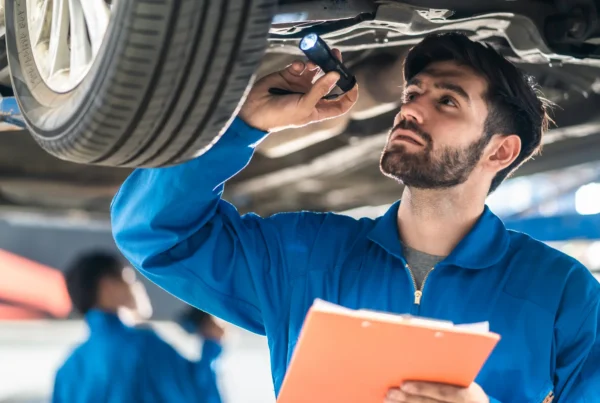
So if your all-seasons are already down near 5/32 heading into December, you are not really choosing between tire types. You are replacing tires either way, which is the natural moment to consider moving up a category. Stop by any of our four Central PA stores and we will measure your tread and talk through the options.
Is a Second Set on Its Own Wheels Worth It?
If you land in Profile 2 or 3, this comes up next. Buying winter tires already mounted on a second set of wheels changes the yearly routine.
Arguments for it:
- The seasonal changeover becomes a straight wheel swap instead of dismounting and remounting tires on the same rims twice a year, so it is faster and easier on both tire beads and wheel finishes. It is a standard job in our tire and wheel service bays.
- Your winter set takes the salt, cinders and everyday road hazards of pothole season instead of your good wheels.
- Total mileage splits across two sets, so each set lasts more calendar years.
- A dedicated set can be fitted with its own sensors so tire pressure monitoring keeps working through the swap.
Arguments against it:
- The upfront outlay is larger than buying tires alone.
- You need somewhere clean, dry and out of direct sun to store four wheels and tires for half the year, a real constraint in a State College apartment or an already-full garage.
- If you end up swapping only every couple of winters, the convenience never quite pays for itself.
What moves the cost in either direction is mostly wheel size and whether the set needs new pressure sensors: larger diameters and sensor-equipped setups sit at the higher end, plain steel wheels at the lower. Rather than quote you a number that would be out of date by next week, request a quote with your year, make, model and tire size, and we will price your specific vehicle both ways, tires only and tires on wheels.
What Winter Tires Will Not Fix
A few honest limits, because overconfidence causes more winter trouble here than bad tires do.
All-wheel drive is not a substitute. The U.S. Tire Manufacturers Association puts it plainly: four-wheel drive may help you go better in snow, but it will not help you stop better or keep you from skidding. Braking and cornering come from the tires, and there are always only four contact patches, whatever badge is on the tailgate.
Cold air pressure quietly drops. USTMA notes tire pressure falls one or two pounds for every ten-degree drop in temperature. And no, letting air out does not help you in snow. Underinflation does not improve traction, it just makes the tire easier to damage.
Studs are legal, but only in a window. Pennsylvania law permits ice grips or studs projecting no more than two thirty-seconds of an inch beyond the tread, and only between November 1 and April 15 of the following year. Worth knowing before you commit, and worth asking us whether studs suit your route.
Some conditions beat every tire. The Weather Service is blunt that there is no safe place on a highway during a snow squall. The right response is to delay the trip, not to trust the rubber.
Getting It Sorted Before the First Storm
The best time to make this call is now, while you still have a choice, rather than the week of the first real snow when everyone in Centre, Columbia, Union, Snyder, Northumberland and Lycoming counties is calling at once.
Bring your vehicle to any of our four stores in Bloomsburg, Shamokin Dam, State College or Williamsport. Tell us your commute, whether you cross a mountain grade, and how your road gets plowed, and we will measure your tread and lay out the honest options for your route. When you are ready for numbers on your own vehicle, request a quote and we will price your current options in your exact size.