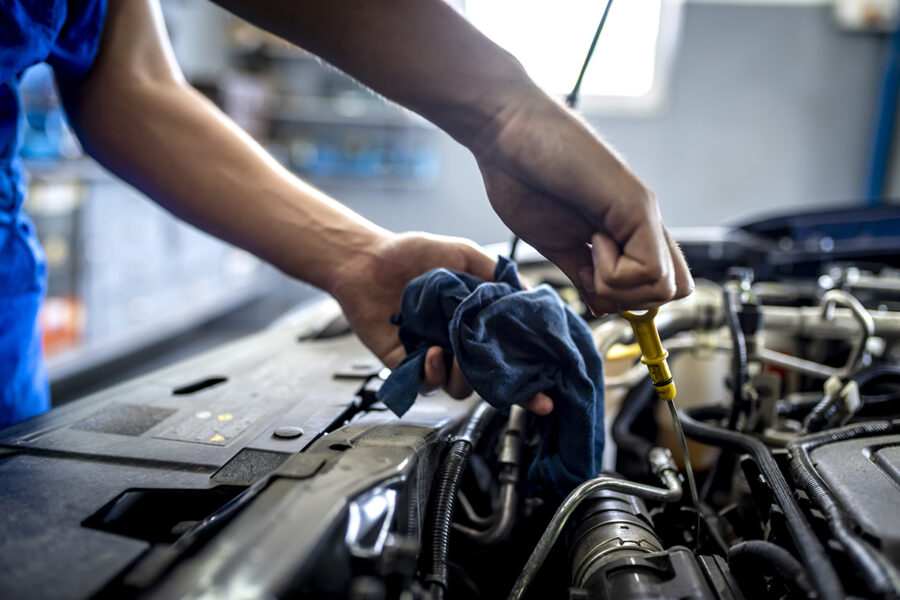
You drop the car off in Bloomsburg before work. Somebody at the counter listens to your description of the noise, looks the vehicle over, writes something up, and says they will call you. A few hours later the phone rings, and the plan is different from the one you agreed to that morning.
That call makes a lot of people tense up. It shouldn’t. Most of the time it is the system working exactly the way Pennsylvania wrote it to work. The difference between a shop that is being straight with you and one that isn’t has almost nothing to do with whether the plan changed. It has to do with what happens before anybody picks up a wrench on the new problem.
Here is what actually goes on between drop-off and that call back, and what you should ask for when the phone rings.
The First Car Repair Estimate in Central PA Is Built on What Can Be Seen From the Outside
When you hand over the keys, the shop knows three things: what you told them, what a technician can see with the vehicle sitting on the ground, and what a road test reveals. That is real information. A road test tells a good technician whether a pull is a brake problem or an alignment problem, and your description of when the noise happens narrows the search enormously.
But every one of those observations is made through a wheel, a splash shield, or a layer of undercarriage grime. The initial write-up is a starting point, honestly assembled from what is visible at that moment. It is a plan of attack, not a verdict.
The shops worth trusting say so out loud. If someone commits to a firm final figure on a salt-belt vehicle before it has been in the air with the wheels off, they are guessing and calling it a fact. A first car repair estimate in Central PA is a hypothesis that the teardown is about to test.
Pennsylvania Law Gives You Three Ways to Authorize a Repair
Most drivers never learn this, and it is the most useful thing here.
Pennsylvania’s automotive trade practice regulations anticipate exactly this situation, where the exact cost of a repair cannot be known in advance. Rather than leaving it to whoever is behind the counter, the regulations say the customer chooses one of three approaches:
- Nothing gets done until you approve it. No repairs are performed until the shop notifies you of the exact nature of the repairs to be performed and the total to be charged, and you authorize it.
- Work proceeds up to a limit you set. Repairs can begin, but if they will exceed a figure you specified in advance, the shop has to come back and get your authorization, spoken or written, before going further.
- You authorize the repair without a limit. In this case the shop has to tell you its hourly labor rate before the work starts.
Those describe three very different mornings. The first means your car sits until you answer your phone. The second gives the shop room to keep moving while capping your exposure. The third is the fastest, and it is the right pick when a vehicle absolutely has to be back on the road that day.
None of them is a trap. Pick one out loud at the counter, in Bloomsburg, Shamokin Dam, State College or Williamsport. If nobody offers, ask. That single question turns the surprise phone call into a scheduled step in a process you already agreed to.
Why the Wheels Have to Come Off Before Anyone Really Knows
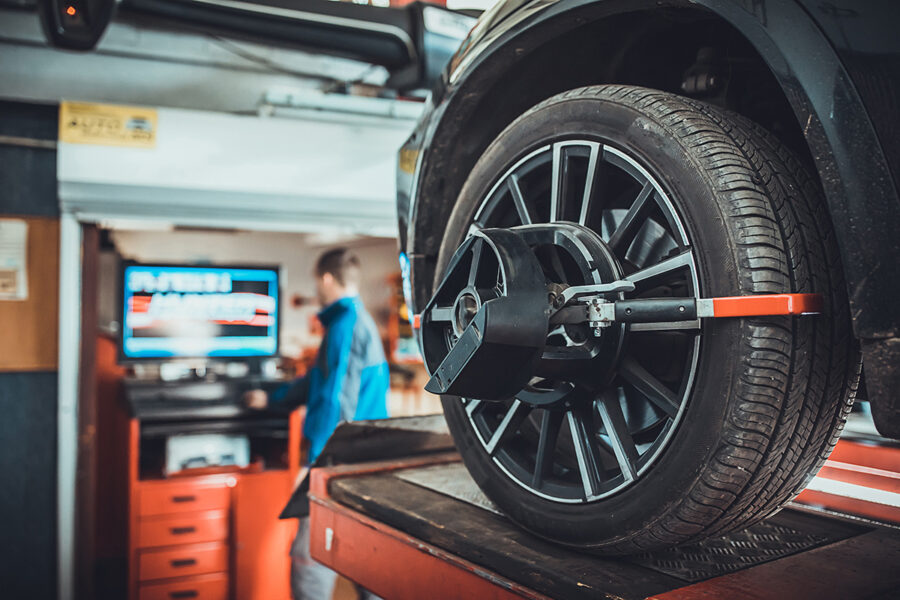
This is not shop folklore. The Commonwealth’s own annual safety inspection procedure directs the inspector to remove at least one front and one opposite rear wheel as part of the beneath-vehicle portion of the brake inspection. Anyone who has taken a car through a Pennsylvania state inspection has had this done to their vehicle, whether they knew it or not.
The state requires it because there is no other way. A wheel is a lid. Behind it sit the caliper, the bracket, the hardware, the hose, the hard line where it meets the flex line, the rotor’s inboard face, and the parking brake components. From the outside, on the ground, most of that is either invisible or visible only as a sliver.
So the moment the wheels come off is the moment the honest information arrives. The overwhelming majority of “the estimate changed” calls start in that first hour of teardown, and almost all of them are the same story. Something that could not be seen through a wheel could suddenly be seen. Sometimes the news is good and the plan shrinks, which is a call nobody remembers afterward.
What Central PA Winters Do to the Hardware Behind the Wheel
Here is the local variable that makes teardown discoveries more common around Bloomsburg, Williamsport, State College and Shamokin Dam than they would be in a dry climate: salt.
PennDOT treated roads in Butler County alone with 23,595 tons of salt during the 2025-2026 winter season, and that is one Pennsylvania county out of sixty-seven. Salt does not simply wash away when spring comes. It collects in the nooks and crannies of a vehicle and gets reactivated every time it rains, which is why corrosion keeps working long after the plows are parked along Route 11 and I-80.
What that means at the lift is specific and repetitive:
- Caliper bracket bolts that will not break loose, because they have been sitting in salt for nine winters
- Slide pins seized in their bores, so a caliper cannot move the way it has to
- Bleeder screws that shear instead of turn
- Hardware clips rusted into the abutment surfaces they are supposed to sit against
- A steel brake line that looks fine from ten feet away and turns out to be weeping at a flare fitting once the wheel is out of the way
That is what a decade of Pennsylvania winters does to exposed steel. Every one of those findings changes the labor involved, the parts needed, or both, and every one is invisible until the wheel is off.
A shop that does auto repair in Bloomsburg PA week in and week out can often predict which vehicles will fight, and will warn you at the counter. That warning is a courtesy, not a quote.
Some Findings Are Not Optional to Fix
There is a category of discovery where the shop genuinely cannot bolt the wheel back on and mention it next time.
Pennsylvania’s inspection criteria are written as pass or fail conditions. A vehicle must be rejected if its hydraulic hoses or tubing leak, or are flattened, restricted, insecurely fastened or improperly retained. It must be rejected if a caliper or wheel cylinder leaks, is missing parts, or does not function properly, and if the linings are contaminated with oil, grease, or anything else that would affect proper brake operation. The Commonwealth sets the thresholds precisely, down to minimum friction material thickness and maximum drum and rotor wear.
When a technician uncovers one of those during a repair, the finding does not go away because the timing was inconvenient. A leaking hydraulic line is a rejection item whether it turned up during an inspection or during a brake job you booked because of brake warning signs you noticed on your commute.
A good service writer will sort the call into two buckets and label them clearly:
- Must be addressed now. Safety and inspection items that make the vehicle unfit to hand back, or that would fail the next inspection outright.
- Should be planned. Real findings with runway on them, which you can schedule for a future visit.
If everything on a call is presented as equally urgent, ask which bucket each item is in. Any shop that knows its work can answer that instantly.
Parts Change the Plan, Too
Not every revision comes from the vehicle. Some come from the parts counter, and there are two versions of it.
The number on the box doesn’t match. Manufacturers retire part numbers and replace them with new ones that do the same job. This is called a supersession, and it happens for ordinary reasons: a design improvement, a consolidation of nearly identical parts across models, a change of supplier, or a part reaching end of life and coming back remanufactured. Mercedes revised the oil cooler seal for its OM642 engine across three successive part numbers to deal with a leaking problem. When a number has been superseded, the box that arrives will not match the number originally looked up, and that is normal rather than a sign of a wrong part. The new number is the current approved replacement.
The part isn’t there. A component can be back-ordered across every warehouse in the region. Nothing about the repair itself has changed, only the day your vehicle can go back on the road. That still earns a phone call, because your Tuesday depends on it.
How the Call Back Should Sound
A revised estimate should arrive as a conversation, not as a line item you discover at pickup. When the phone rings, a complete call covers five things:
- What was found, described plainly enough that you can picture it
- What it means for the vehicle if it is addressed and if it isn’t
- Which bucket it belongs in, must-do or can-wait
- What changes about timing, including whether a part has to come from somewhere
- An explicit request for your authorization to proceed
That last one matters most. “We found a seized caliper bracket, here is what it takes to make it right, do you want us to go ahead?” is a request. Anything that sounds like a notification is not. Many shops now send photos or a short video along with the call so you can see what the technician is looking at. If you would find that helpful, ask.
The Paperwork That Protects You
Pennsylvania’s regulations put some structure behind that phone call.
When a shop takes your approval over the phone, it has to keep a written record of it, including the date and time the authorization came in, who at the shop took it, your name as the person who gave it, an exact description of what you authorized, and the phone number called if the shop placed the call. That record exists so that “I never approved that” and “yes you did” never have to be settled by memory.
The shop also has to disclose the amount of any charge for an estimate or diagnosis before it obtains your authorization. If diagnostic time is going to be billed, you should hear about it up front, not afterward.
And you have the right, on request, to have your replaced parts returned when the service is finished, or to inspect them where that is possible. The shop is required to tell you that right exists before taking your authorization. For a fleet operator running vans out of Williamsport or Shamokin Dam, seeing how a part actually failed is what lets a maintenance manager adjust the interval on the rest of the fleet before it happens twice.
What to Ask For When You Get the Call
Keep this short list somewhere. It works at any auto repair shop in Williamsport PA, in Bloomsburg, or anywhere else you hand over a set of keys:
- Which of the three authorization options are we operating under right now?
- Is this a rejection item, or a recommendation?
- Is the part on the shelf, or is it coming?
- Is the vehicle safe to drive if I decide to wait?
- Can you send me a current written quote on the revised work before you start?
That last question is the one that closes the loop. Parts availability and labor times move constantly, so no article, and no figure you were quoted last year, can tell you what your specific vehicle needs today. The only quote worth having is the current one for your car, your mileage, and what the technician is actually looking at.
Bring Us the Car and We’ll Show You What We Find
An estimate that changes is not a red flag. An estimate that changes without a phone call is. Every revision on the general auto repair and maintenance work we do at our Bloomsburg, Shamokin Dam, State College and Williamsport stores starts with a conversation, a clear must-do versus can-wait, and your approval before anyone touches anything beyond what you agreed to.
If you have a repair coming up and you would rather start with a straight answer than a guess, request a current quote and tell us what your vehicle is doing. We will tell you what we can see from the outside, what we will need the wheels off to confirm, and exactly when we will call you.